

I Go by Thickness

In his 1962 commencement address at Yale, John F. Kennedy declared that “the real enemy of truth is very often not the lie––deliberate, contrived, and dishonest––but the myth––persistent, persuasive, and unrealistic.” Some myths that run through modern culture that are persistent, persuasive, and unrealistic are about what constitutes progress. These myths hold that great leadership is essential, endless consumption and development are necessary, the private sector knows best, competition and pursuing our self-interest are in our nature. These myths are sold as the insurance policy for freedom and democracy.
The common good pays a severe price for living out this storyline. We have a choice to shift our attention from the dominant mythology to a narrative that believes in reclaiming local community control of our economy, moving from consumer to producer, and letting the Pharaohs among us rest in peace.
The shift to this communal narrative is accelerated when we see that it is connectors, not leaders or heroes, who hold the keys to authentic transformation. Connectors by nature or training know how to bring people together both for its own sake and for their collective well-being. It serves us well to consider connectors to be essential to the process of launching and normalizing alternatives to the myths about progress. This would expand our recognition of the role of connectors in building neighborhood trust and having them implement innovative ways to increase community control of the land, strengthen local economies, locally care for the planet, and other aspects of serving the commons.
Connecting people with each other also can play a larger role in efforts of advocacy and reform. Explicitly building trust among the participants will help sustain these efforts. This could give more continuity and permanence to activism aimed at societal transformation. Traditional activism now devotes little effort to the expansion of social capital within the movement. Too often when we go to a protest, all attention is on the speaker, the music, and the microphone. We leave inspired, motivated, and grateful to be with people of a similar passion. But we most often have no more relationship with strangers in the crowd than when we came in. This is a critical place where more attention to horizontal connections would deepen engagement after events. This would encourage ways that supporters could help beyond donating, writing letters, yard signs, and even voting.
Departure
One form for the shift to a communal narrative is Departure. It is a way of stepping into an alternative future that does not depend on replacing people in power or changing their minds.
Departure has the appeal of being within our control. Plus, we can find examples of it all around us. It also is set up to endure for the long run.
Departure makes some critical demands of us. We need to accept change that is slow, small, uncertain, and very inconvenient. Departure calls for us to shift our primary attention to horizontal relationships and turn away from the habits of listening to the messages from the mountaintop. A narrative aligned with the common good is built by welcoming circles of citizens producing their future on the sidewalks.
Exodus into the Wilderness
Departure can be symbolized as a re-performance of the Biblical Exodus into the wilderness. After four hundred years of slavery, the Israelites left Egypt and sought their liberation in the wilderness. The modern version of the wilderness is the neighborhood. It has our best chance to produce a narrative that restores our humanity because it is within reach and operates in the Creative Economy, as distinguished from the Market Economy. The Market Economy is built on financial capital. It is measured by consumer spending, wealth accumulation, convenience, and viral scale. It depends on the compliance of citizens and systems of control even in its efforts to care for people. The Creative Economy trades on social capital. It is measured by trust, wealth re-distribution, local exchange, generosity, and small, human scale. It depends on the accountability of citizens and associational life to produce citizen well-being.
An important catalyst for the Creative Economy are connectors. Connectors accelerate change by their consciousness and their methodology. Both are vital in building trust, which leads to citizens being accountable to each other. Both help end our social and economic isolation, which is central to creating an alternative to empire. When we attend to social capital, we are engaged in producing our well-being instead of purchasing it.
More Than a Joke
A woman came up to a man at a bar and said, “Your socks don’t match.’”
The man said, “That’s ok, I go by thickness.” ––Steven Wright
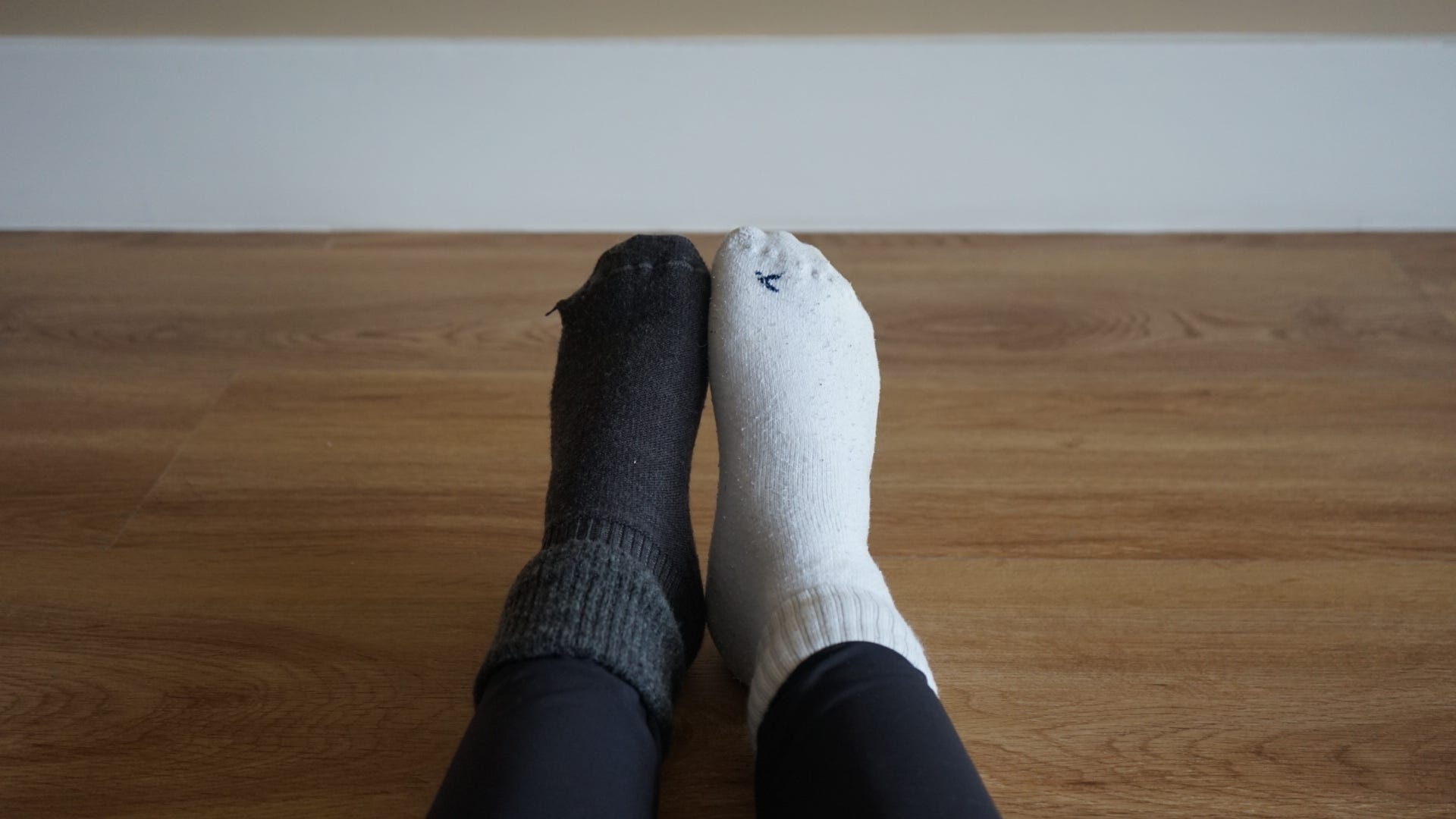
This humor has stayed with me for decades. I knew all along the way that my socks did not match, so I have had to go by thickness. One form of thickness has been to spend energy on how people come together. I have spent years working to develop the means to create relational depth and trust in each moment of our efforts. Thickness now calls us to give first priority to building social capital and do it with neighbors in a community rather than in institutions that are organized to make sure the socks match. In our efforts to build the common good, the strategy is to end social and economic isolation moment to moment, in addition to supporting our larger efforts at change.
Departure often entails focusing on neighborhoods or small rural communities. When we address cities and regions, we are dependent on change in the people in charge. The neighborhood is the scale where the Creative Economy thrives.
Stepping toward the Creative Economy
Producing our well-being rather than purchasing it requires a deep understanding about the narrative of the Creative Economy. It is Creative in the usual sense of the word, which has to do with an aesthetic associated with the arts. It calls us to expand the importance of local theatre, music, food, arts, and religion. This includes tending to the history and the culture that is embodied in a place.
It is an Economy in that it focuses on neighbors locally producing and distributing their own well-being. This takes the form of caring for the stranger, investing in local enterprise, adopting innovative forms of housing, protecting the environment, taking land off the market, inviting teenagers to be useful, and affirming the gifts of people currently and historically isolated.
As punctuation to all of this, a couple of examples:
Renting Partnerships
Renting Partnerships is a housing innovation that bestows to low-income tenants many of the rights and responsibilities of homeownership. In addition to paying monthly rent, residents actively participate in the management of the property. They take care of repairs, keep the property clean, landscape, watch out for the well-being of other tenants, vote on operating policies, participate in choosing new tenants.
Every household signs up to stay five years and earns Rental Equity credits as they pay rent, attend required monthly meetings, and complete work assignments. At the end of five years, they receive $5,000. If they stay and participate longer, residents can earn up to $10,000. This is their money to use as they wish. It can also be used earlier for difficult times such as illness, car repair, other unexpected expenses.
What makes Renting Partnerships work are frequent meetings and times for residents to come together for a variety of reasons. Turnover is exceptionally low for affordable housing, which is often not the case.
We Love Long Beach
Beginning in 2008, Scotty Jones and his sister “nervously” hosted their first neighborhood breakfast. They made a flyer, knocked on doors, and invited all to their front yard for coffee and pancakes. Over fifty people came to the first breakfast.
The idea spread rapidly around the city. A booklet entitled “Come Eat with Us: A Simple Guide to Connecting with Neighbors around Breakfast” was written to help new people host their first breakfast. Participation ebbs and flows, but the practice has spread across the neighborhoods of Long Beach to at times up to five hundred breakfasts occurring on a weekend day.
The Long Beach booklet talks about how courage is required to gather neighbors like this, so it takes two people to host a breakfast, especially the first one. At the end of the breakfast, before everyone leaves, they plan the next gathering. When the breakfasts become regular, the neighborhood becomes safer; people notice when someone needs help, they begin to support local schools and businesses. They now refer to the ongoing practice as The Joy of Community.
The common thread for the Creative Economy is people’s commitment to the common good. Innovations like these are important news for they affirm our humanity and honor the original meaning of the word “economy,” which was household management. Historically, and now more than ever, the Creative Economy is a culture which favors the common good that is best for managing our households.
Naming the false myths we live by is the first step in the direction of a new common good. The second step is the transvaluation of values that follows when we love our neighbor as ourselves. Much food for thought here. Thank you, Peter